By Vet on the Road — Mobile equine and large animal vet across the Central Coast NSW
This article is general in nature and is not a substitute for veterinary advice. Every animal is different — always consult your veterinarian for diagnosis and treatment specific to your horse.
Hendra is a rare but deadly virus spread from flying foxes to horses, and it can pass from horses to people. It has killed horses in NSW and people elsewhere in Australia. There is no effective treatment once a horse is infected, but a safe vaccination prevents it. Vet on the Road strongly recommends it for every Central Coast horse.
Hendra is a rare but deadly virus spread from flying foxes to horses, and it can pass from horses to people. It has killed horses in NSW and people elsewhere in Australia. There is no effective treatment once a horse is infected, but a safe vaccination prevents it. Vet on the Road strongly recommends it for every Central Coast horse.
Introduction
A lot of Central Coast horse owners think Hendra is a Queensland problem. It isn’t. Flying foxes right across New South Wales carry the virus, and the Central Coast sits inside the risk zone.
In July 2023, an unvaccinated horse near Newcastle died from confirmed Hendra virus. That is barely an hour up the road. It was the first confirmed NSW case in almost two years, and a reminder that this is a local risk, not a distant one.
Dr Tom Quilty has treated horses across the Central Coast and, before that, in remote Western Australia. Hendra is one of the few horse diseases that also puts the people around the horse at risk. Here is what every NSW horse owner should understand, in plain language. For the bigger picture on routine equine care, see our complete equine health guide.
What Is Hendra Virus, and Why Does It Matter in NSW?
Hendra is a virus that spreads from flying foxes to horses, and it can pass from horses to humans. It is rare, but more than 70% of infected horses die from it, and it has killed people.
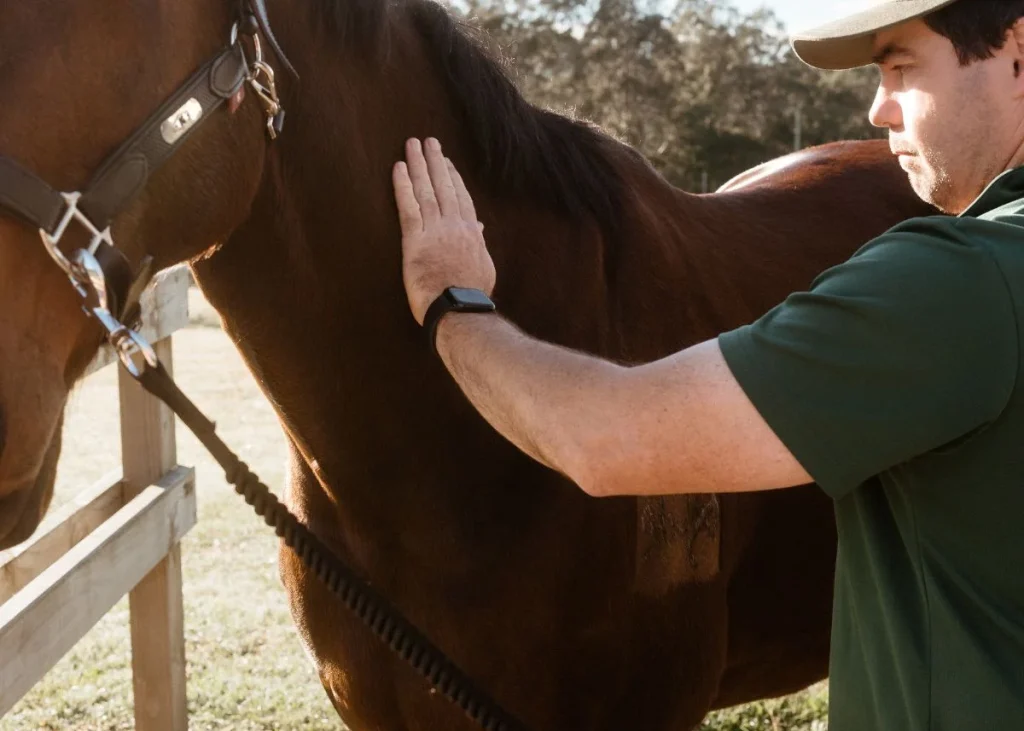
Flying foxes, also called fruit bats, are the natural carriers. They carry the virus without getting sick themselves, and all four Australian flying fox species can carry it.
Horses catch Hendra when they come into contact with bat urine, saliva, or birth fluids, usually through contaminated feed, water, or pasture. According to the NSW Department of Primary Industries, the virus then multiplies in the horse and can make it very unwell very fast.
The reason Hendra matters so much is that it does not stay with the horse. It is zoonotic, which means it can spread from an infected horse to the humans caring for it. People have died from Hendra in Australia.
As Dr Tom puts it, the virus is present in flying fox colonies right across the country. Those colonies exist here on the Central Coast, so the risk, while low on any given day, is always there for horses and the people around them.
Is the Hendra Vaccine Compulsory in NSW?
No. The Hendra vaccine is not required by law in NSW. But it is strongly recommended, and it is the most effective way to protect your horse.
There is no law that forces every horse in NSW to be vaccinated against Hendra. Some equine vets will not treat an unvaccinated horse at all, because of the risk to themselves and their staff.
Vet on the Road takes a different approach. Dr Tom does not refuse to see unvaccinated horses. He believes vets have to be on the front line, and he will still attend. But he strongly recommends vaccination for every horse he sees.
His reasoning is simple. In his words, it is a deadly disease, and it can be prevented by vaccination. There is no effective treatment once a horse is infected, so prevention is the only real protection.
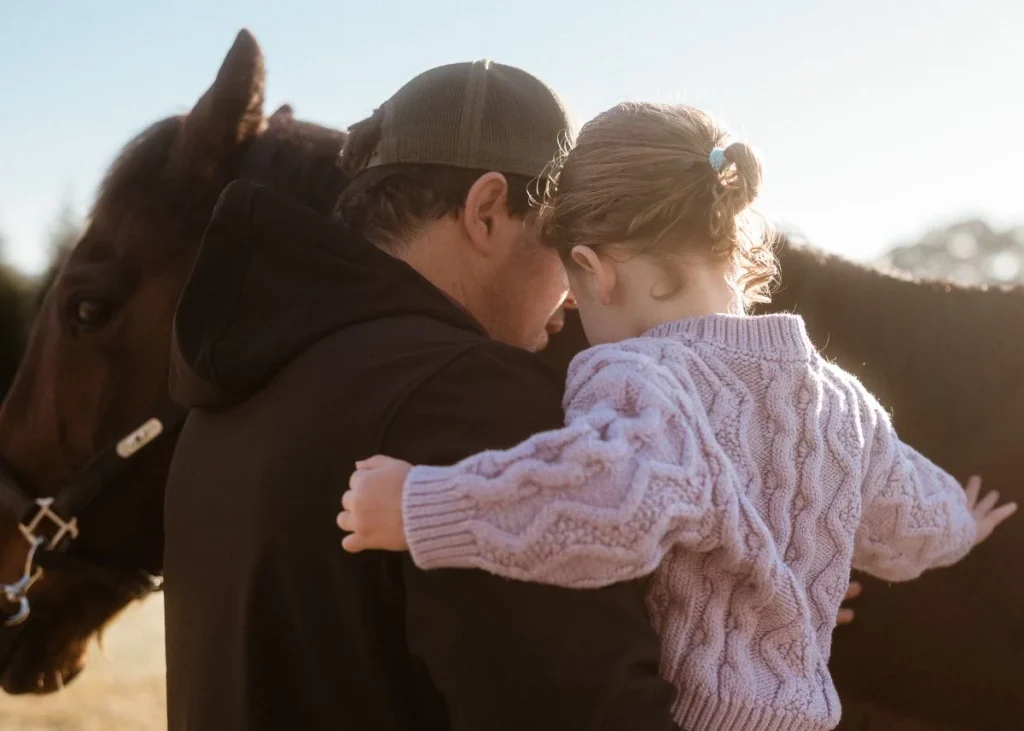
There is a practical benefit too. A vaccinated horse is easier to get care for, because more vets are willing to do equine work when the Hendra risk is removed. Vaccinating protects your horse, your family, and everyone who handles the horse.
How Does the Hendra Vaccination Course Work?
The primary course is two injections given three to six weeks apart, a third injection at six months, then a booster every year.
The Hendra vaccination is given by a registered vet. Before the first dose, your horse needs to be microchipped, if it isn’t already. The primary course runs like this:
- First injection to start building immunity.
- Second injection three to six weeks later.
- Third injection about six months after the second.
- A booster every 12 months after that.
Horses can start the course from around four months of age. Each dose is recorded in the national Hendra vaccination register, so there is a clear record of your horse’s protection.
The yearly booster is easy to line up with your horse’s annual health check and dental. As Dr Tom points out, you should always have an annual check anyway, so the Hendra booster, the health check, and the dental can all happen in one visit.
How Do You Lower Your Horse’s Hendra Risk?
Vaccination is the single most effective step. On top of that, keep flying foxes away from your horse’s feed and water.
Aside from vaccination, a few paddock changes lower the risk:
- Move feed and water bins away from trees, especially flowering or fruiting trees that attract flying foxes.
- Cover feed and water containers so bat droppings and saliva can’t contaminate them.
- Take horses out of paddocks with flowering or fruiting trees while flying foxes are feeding, or bring them in overnight if you can.
- Clean up fallen fruit that draws bats in.
Watch for a horse that suddenly becomes unwell: a rapid fever, going off its food, standing apart from the others, nasal discharge, laboured breathing, or looking wobbly and uncoordinated. Hendra can look like other illnesses, including colic, so any sudden severe illness in a horse is a reason to call your vet straight away. If you suspect Hendra, keep away from the horse and call.
What If My Horse Is Unvaccinated and Needs Emergency Care?
Dr Tom will still come. Emergencies are emergencies. But an unvaccinated horse showing signs that could be Hendra changes how the visit has to be handled.
If there is any chance a sick horse has Hendra, safety comes first. The owner and anyone else at the property need to move away from the horse and keep other animals away. Don’t move halters, leads, or gear that has touched the horse, and make sure anyone who has been in contact with it knows about the possible risk.
Dr Tom would attend in full protective equipment: gown, gloves, mask, and eye protection, head to toe, to keep any bodily fluids off his skin. Because moving a horse that may have Hendra can spread the risk, the focus is on keeping the horse isolated and still, not transporting it anywhere. Suspected cases must be reported to the Emergency Animal Disease Hotline on 1800 675 888.
A vaccinated horse removes all of this. Care is faster, simpler, and safer for everyone.
Frequently Asked Questions About Hendra Virus on the Central Coast
Meet the Team at Vet on the Road
Vet on the Road brings experienced equine care to your property across the Central Coast, no float required.
Dr Tom Quilty has more than a decade of mixed practice behind him, including five years as a primary vet in the remote Pilbara and years treating horses here on the Central Coast. He can start or update your horse’s Hendra vaccination at your property, and combine it with the annual health check and dental in one visit.
If you have more than one horse, the travel fee is shared across the visit, so it’s cost-effective for larger properties.
Phone or text: 0490 877 553
Hours: Monday to Friday, 8am to 4pm
Service area: Central Coast NSW