By Dr Tom Quilty, BVSc | Vet on the Road — Mobile Equine Veterinary Care across the Central Coast NSW
This article is general in nature and is not a substitute for veterinary advice. Every animal is different — always consult your veterinarian for diagnosis and treatment specific to your pet.
Dental floating is the rasping of sharp enamel edges that form on a horse’s continuously erupting teeth, keeping the chewing surface flat so feed can be ground down properly. Most adult horses need a dental assessment every year. Dr Tom Quilty performs dental examinations and floating on your property across the Central Coast.
Introduction
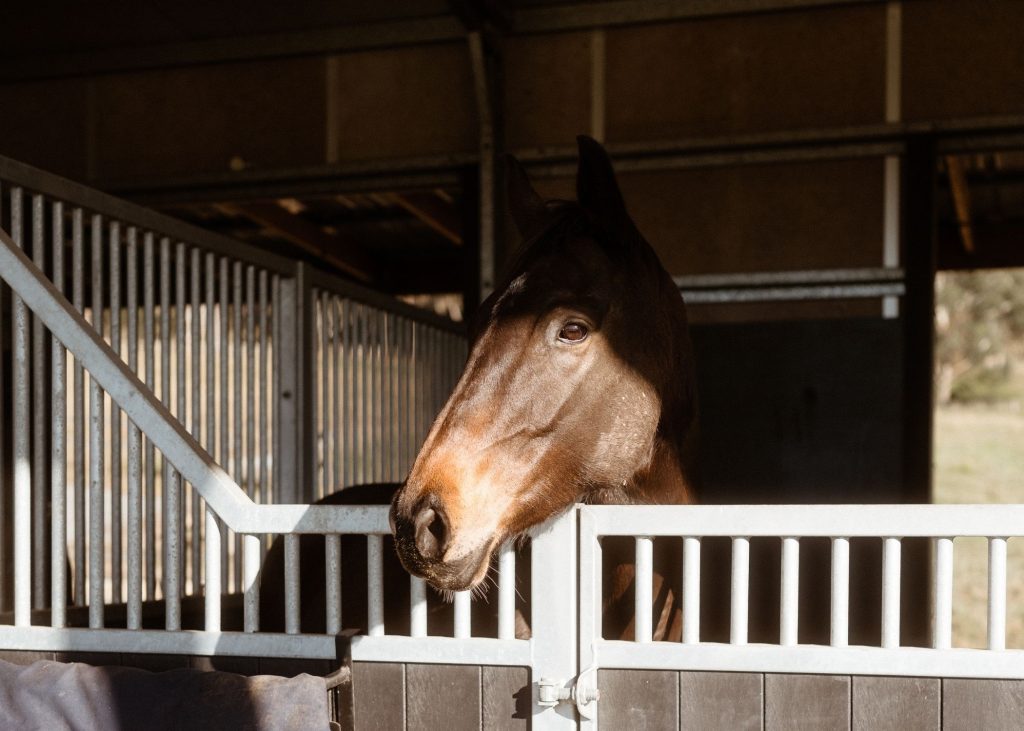
Ask a Central Coast horse owner when their horse last had a dental check and you’ll often get a pause. Not through neglect, but because a horse with a sore mouth rarely makes it obvious. Feed still disappears. The horse still comes to the gate. Underneath, sharp enamel edges may be making every mouthful harder work than it should be.
The float itself is only part of the visit. It comes with a full oral examination, and that matters because sharp enamel edges aren’t the only thing that can go wrong in a horse’s mouth. Many other disease processes can be developing quietly in there, and a dental visit is often where they’re first picked up.
This guide explains what horse dental floating actually is, the signs to watch for, how often it should happen, and what a dental visit looks like when the vet comes to you. It draws on the clinical experience of Dr Tom Quilty, a mixed-practice veterinarian of more than ten years, including five treating horses in the remote Pilbara, who now provides mobile veterinary care across the Central Coast.
If you’re after the bigger picture of what a full year of horse health care involves, start with our complete equine health guide, then come back here for the dental detail.
- Introduction
- Why Do Horses Need Dental Floating?
- Signs Your Horse May Need Dental Work
- How Often Does a Horse Need Dental Floating?
- What Happens During a Dental Examination and Float?
- Why Mobile Equine Dentistry Works So Well
- Frequently Asked Questions About Horse Dental Floating on the Central Coast
- Meet the Team at Vet on the Road
Why Do Horses Need Dental Floating?
Floating keeps the chewing surface of a horse’s teeth flat so feed can be ground down properly. Horse teeth keep erupting throughout life, and without regular attention, sharp enamel edges form that make chewing less effective and less comfortable.
A horse’s teeth work differently to ours. Each tooth carries a long reserve below the gum line that keeps erupting throughout life, wearing down as the horse grinds its feed. When that wear is uneven, sharp edges and hooks develop.
As Dr Tom puts it, floating “just purely refers to keeping the occlusal surface nice and flat”. The occlusal surface is simply the chewing surface. The edges need to be flat so the horse can grind feed down properly for digestion. When they’re not, chewing becomes inefficient, feed is wasted, and the mouth can become genuinely sore.
One thing worth being clear about: needing a float doesn’t mean something has gone wrong. It’s routine preventative care, like hoof trimming. In Dr Tom’s experience, how quickly edges develop varies from horse to horse, depending on diet, chewing mechanics, and the shape of the mouth, which is why regular assessment matters more than any fixed rule.
Signs Your Horse May Need Dental Work
The most common sign owners notice is dropping partially chewed feed from the mouth, known as quidding. Weight loss and a change in the way a horse chews are also warning signs that deserve a call to your vet.
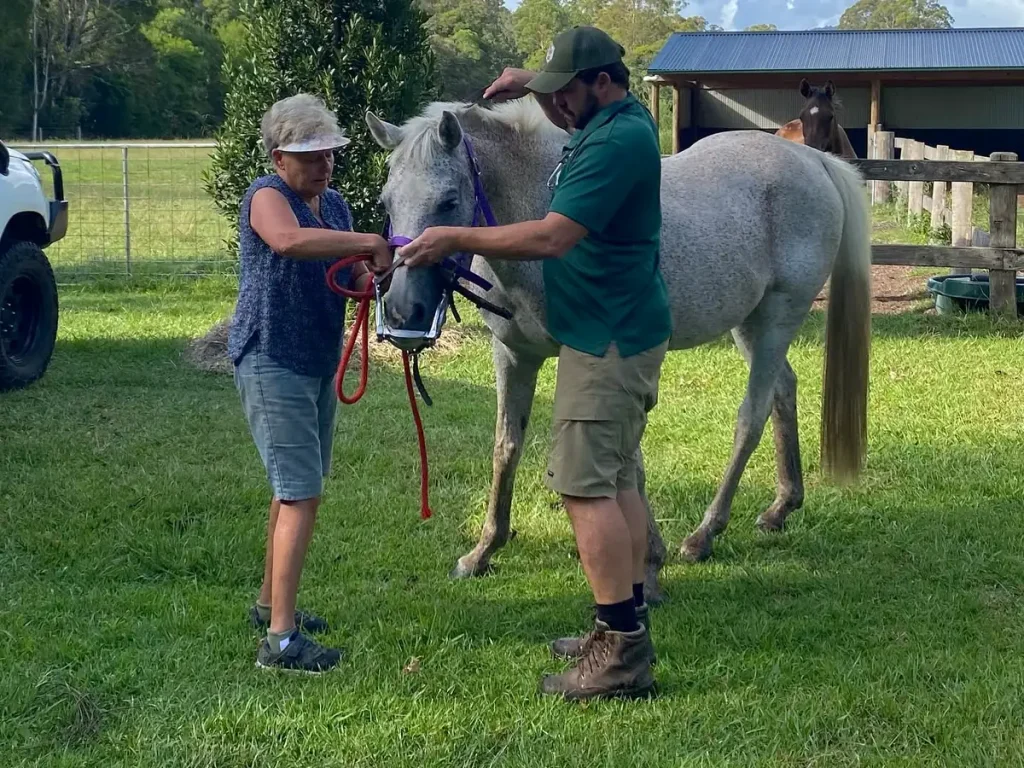
“The most common one that owners see would be dropping food from the mouth,” Dr Tom says. Vets call this quidding: the horse picks up its feed, partly chews it, then drops it in half-formed balls. Weight loss tends to follow “if it’s a more chronic condition”, because the horse simply can’t process feed properly. Both signs are described in the MSD Veterinary Manual’s overview of equine dentistry as classic markers of dental disease.
For owners who know their horses well, the earliest clue is subtler: a change in the chewing action itself, the way the horse grinds and shears its feed.
Book a dental assessment if you notice any of the following:
- Dropping partially chewed feed (quidding)
- Unexplained weight loss or loss of condition
- A change in the way your horse chews
- Fussing on the bit, head tossing, or a change in ridden behaviour
- Bad breath, swelling along the jaw, or nasal discharge from one nostril
None of these are wait-and-see signs. Dental problems don’t fix themselves, and the earlier they’re picked up, the simpler they are to deal with.
How Often Does a Horse Need Dental Floating?
Most adult horses need a dental assessment once a year. Once a horse is into its 20s, Dr Tom recommends moving to six-monthly checks.
The key word is assessment. “An assessment is done yearly,” Dr Tom explains, but whether floating is actually needed each year “depends on the horse itself, their diet, the way they eat”. A yearly dental check fits neatly alongside the annual health check and vaccinations, so most horses can have it all done in a single visit.
That yearly rhythm lines up with the NSW Department of Primary Industries’ horse care guidelines, which recommend dental checks at least once a year for horses over five, and six-monthly examinations for younger horses between two and five years of age.
Older horses need closer attention. In Dr Tom’s words, horses “run out of their enamel eruption at age 27, give or take”. By that stage the teeth have had decades of wear, and other dental disease processes can take over, not just sharp edges. That’s why he recommends six-monthly checks once a horse is into its 20s. Whatever the age, skipping dental care compounds the problem: what needs a routine float today can become a far more involved issue in a couple of years.
What Happens During a Dental Examination and Float?
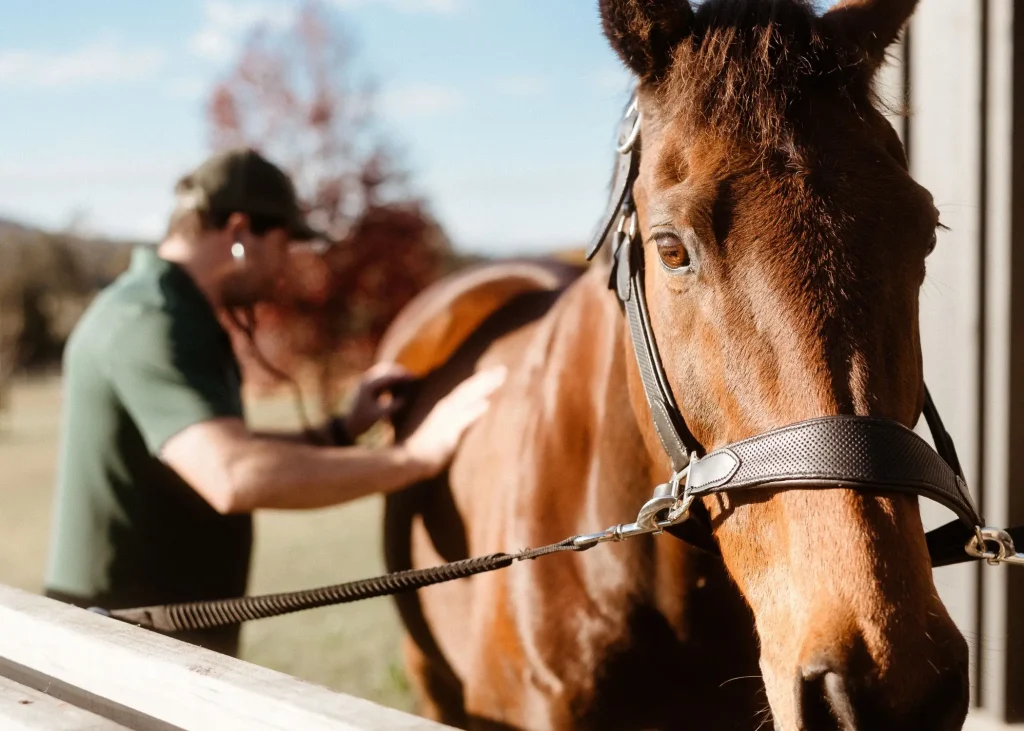
Dr Tom examines the whole mouth using a speculum and a light, checking the teeth visually and by palpation, then floats where needed to restore a flat chewing surface. In most cases the entire visit happens at your property under mild sedation.
A typical dental visit runs like this:
- History and general check. Dr Tom starts with your horse’s history, condition, and anything you’ve noticed at feed time or under saddle.
- Mild sedation. Most horses receive mild sedation so the examination is calm, safe, and thorough.
- Full mouth examination. Using a speculum (a device that safely holds the mouth open) and a good light, Dr Tom inspects the mouth and palpates the teeth and gums. The back cheek teeth sit a long way in, so much of their assessment is done by feel, checking for sharp edges, loose or tender teeth, and anything more serious.
- Floating. Sharp edges and hooks are rasped flat, restoring the chewing surface.
- The plan. You’ll get clear advice on what was found and when the next assessment is due.
Field dentistry has limits worth being upfront about. Assessment and floating are the core of what’s done at your property, and teeth at the front of the mouth, such as incisors and wolf teeth, can also be removed in the field where needed. Severely diseased cheek teeth that need extraction are a different matter. That work belongs in a hospital with full facilities, and if your horse needs it, Dr Tom will say so clearly and help organise the referral.
Why Mobile Equine Dentistry Works So Well
Your horse stays in familiar surroundings with no float travel, and Dr Tom can factor its feeding setup, condition, and environment into the assessment.
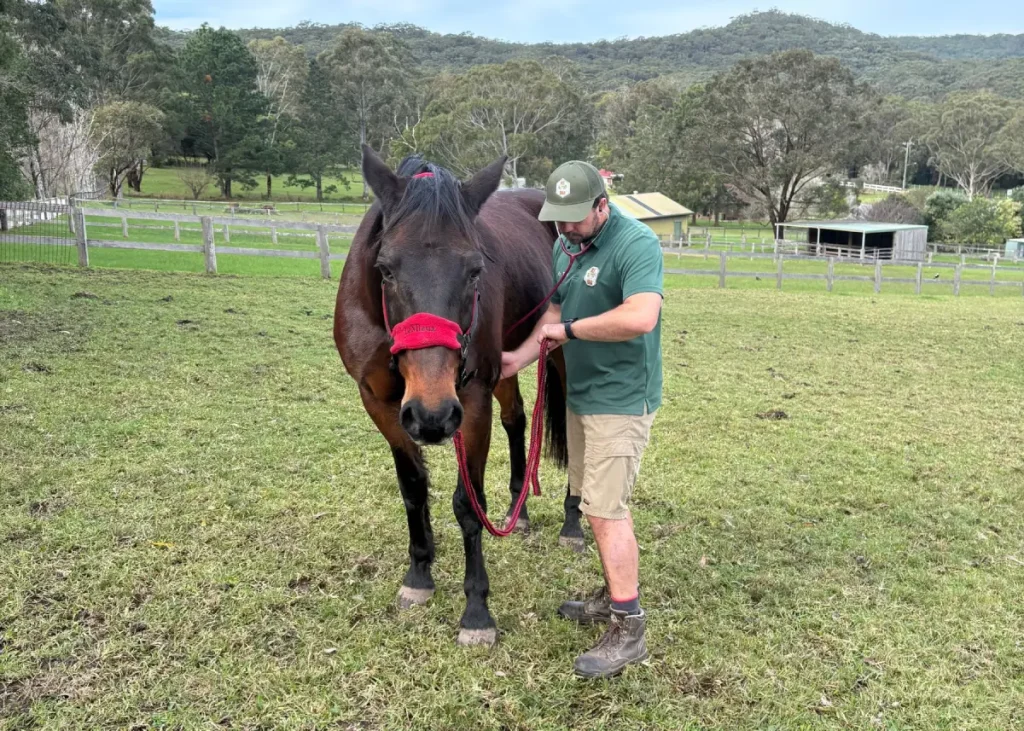
Dental work goes more smoothly when the horse is relaxed, and horses are most relaxed at home. There’s no loading onto a float, no travel, and no strange yards. The horse is sedated, examined, and floated in its own paddock or stable, and back to normal shortly after. There’s a clinical advantage too: seeing where and how your horse actually eats, and how it’s holding condition, gives Dr Tom context a clinic visit can’t.
For multi-horse properties, the economics work well. The travel fee is charged once per visit regardless of how many horses are seen, so dental checks can be combined with annual health checks and vaccinations across the whole paddock in one booking through our mobile horse vet service.
Frequently Asked Questions About Horse Dental Floating on the Central Coast
Meet the Team at Vet on the Road
A mobile horse vet who brings dental care to your paddock.
Dr Tom Quilty has more than ten years of mixed-practice experience, including five years treating horses and cattle in the remote Pilbara and five years on the Central Coast. Dental examinations and floating are a regular part of his week, and he brings everything needed to your property.
When did your horse last have a dental check? If you’re not sure, that’s usually the answer. Book a visit online, or call or text Dr Tom to arrange an on-property examination anywhere on the Central Coast.
Phone or text: 0490 877 553
Hours: Monday–Friday, 8am–4pm
Service area: Central Coast NSW