By Vet on the Road, mobile horse and large animal vet visiting properties across the Central Coast NSW. Clinically reviewed by Dr Tom Quilty, BVSc.
This article is general in nature and is not a substitute for veterinary advice. Every animal is different — always consult your veterinarian for diagnosis and treatment specific to your pet.
Colic means abdominal pain in a horse. It is not a single disease but a sign that something in the gut is wrong. It can range from mild and short-lived to life-threatening, and because even serious colic can look mild early on, any sign of colic is a reason to call your vet straight away.
Colic means abdominal pain in a horse. It is not a single disease but a sign that something in the gut is wrong. It can range from mild and short-lived to life-threatening, and because even serious colic can look mild early on, any sign of colic is a reason to call your vet straight away.
Introduction
- Introduction
- What Is Colic in Horses?
- Signs of Colic: What to Watch For
- When Should You Call the Vet About Colic?
- What to Do While You Wait for the Vet
- How Does a Vet Assess Colic On-Site?
- When Is Colic Surgical? Understanding Referral
- Preventing Colic on the Central Coast
- Frequently Asked Questions About Colic on the Central Coast
If you keep horses on a Central Coast property, colic is probably the emergency you think about most, and the hardest to judge. Your horse is pawing, looking at its flank, lying down and getting back up, and you are left wondering: is this serious, or will it pass?
Colic is one of the most common reasons horse owners call a vet, and the reassuring news is that most cases, caught early, can be managed on your property. Dr Tom Quilty brings more than a decade of mixed practice, including five years at a Central Coast hospital, and sees colic regularly across the region. This guide covers the signs to watch for, what to do while you wait, and how Dr Tom assesses a colicky horse on site. For year-round horse care, see our Horse Vet 101 complete equine health guide.
What Is Colic in Horses?
Colic is not a single disease. It is a catch-all term for abdominal pain in a horse. It simply means the horse’s gut is hurting, and the cause can be almost anything.
As Dr Tom puts it, colic “just means abdominal pain. It’s not a diagnosis. It’s a syndrome.” The word tells you the horse is in pain somewhere in the abdomen, not why. The cause might be gas, a change in feed, an impaction, dehydration, sand in the gut or, less often, a twist or displacement that needs surgery.
That range is why colic is taken so seriously. A mild gas colic might settle within an hour; a strangulating twist is a race against the clock. Early on, the two can look surprisingly similar, which is the most important thing for any owner to understand.
Signs of Colic: What to Watch For
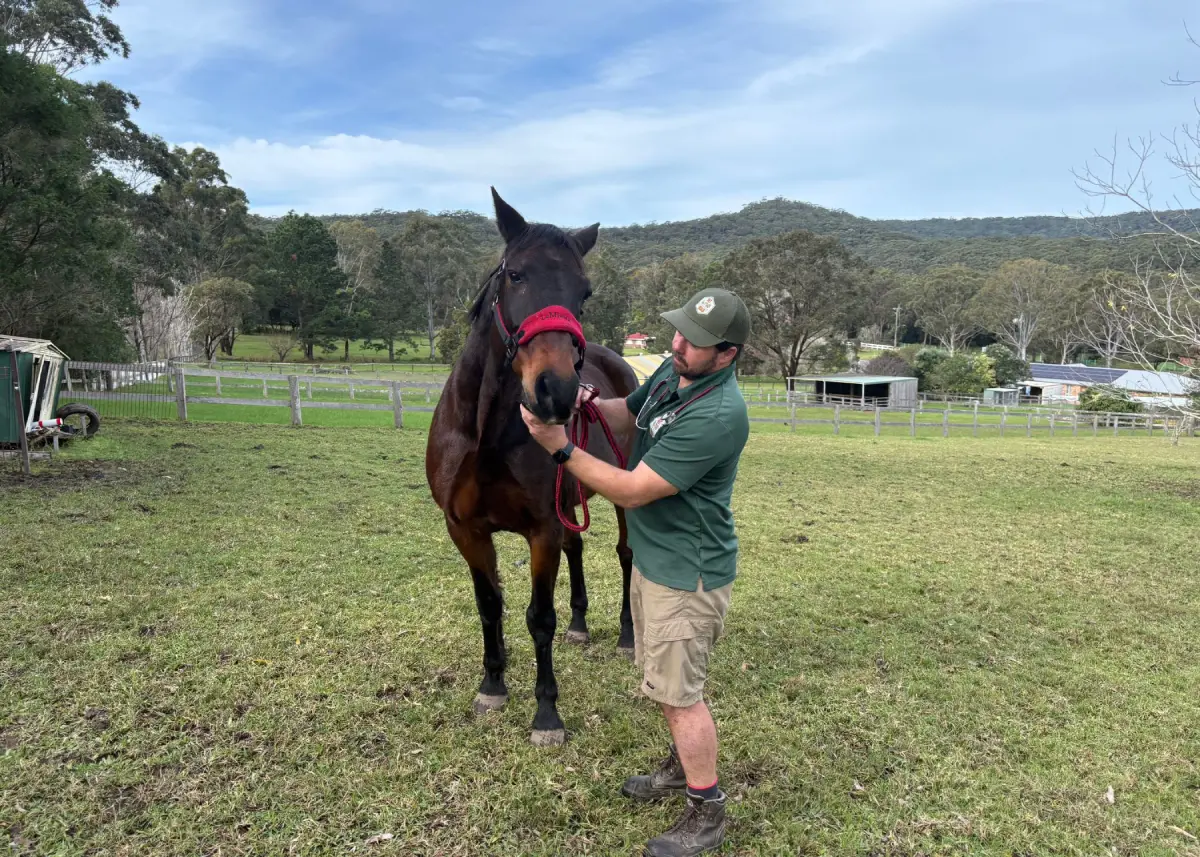
The classic signs of colic are a horse that looks uncomfortable in the belly: pawing, looking at its flanks, stretching out, and repeatedly lying down and getting up. Severe pain shows as violent rolling, thrashing and an inability to settle.
Early and mild signs
In Dr Tom’s experience the early signs are subtle and easy to miss. A colicky horse is “just uncomfortable in the belly” and may stand oddly, stretch out, or turn to look at or bite its sides and flanks. Watch for:
- Pawing at the ground or repeatedly shifting weight
- Looking at, nipping or kicking towards the flank or belly
- Stretching out as if to urinate, without passing urine
- Lying down and getting up more than usual, or rolling gently
- Reduced appetite, or fewer (or no) droppings than normal
- Mild sweating or a generally “off” demeanour
Individually these can look like ordinary behaviour. The key is a change from your horse’s normal pattern.
Signs that mean act now
Some signs point to significant pain and a potentially serious problem. Call your vet immediately if you see:
- Violent rolling, thrashing or throwing itself to the ground
- An inability to get comfortable no matter what it does
- Continuous or heavy sweating
- Rapid breathing, or an elevated and anxious state
- Pale, dark or tacky gums
You do not need to wait to see whether these signs settle. With colic, the safest assumption is always that it could be serious.
When Should You Call the Vet About Colic?
Call your vet at the first sign of colic, every time. You do not need to wait a set period or try to judge how bad it is yourself.
Dr Tom is clear on this: “any colic is a reason to call a vet.” Because colic “has a potential to be very serious,” he treats every call as worth making. As he says, if an owner is concerned enough to call it colic, “they’ve got a concern, and if they’ve got a concern, that should be addressed.”
There is no benefit in waiting to see if it comes good. Early colic is far easier to manage than colic that has been building for hours. If you are unsure whether what you are seeing is colic, that uncertainty is itself a good reason to call.
What to Do While You Wait for the Vet
While you wait for the vet, take feed and water away, keep your horse calm, and allow gentle walking if it is safe. Never give any medication unless your vet has told you to.
Once you have called, a few simple things help your horse and your vet while help is on the way:
- Withhold feed and water. Take it all away until the vet has assessed your horse. Most colicky horses won’t want to eat anyway, and an empty gut is safer if treatment or referral is needed.
- Note the time and what you’ve seen. When the signs started, what your horse is doing, droppings or lack of them. Dr Tom will ask on arrival.
- Allow gentle walking, nothing strenuous. Dr Tom suggests keeping them “up and walking… stretching out the abdomen may allow things within the abdomen to settle or move.” Let the horse rest if it wants to, and don’t risk yourself if it is rolling violently.
- Keep everyone safe. A horse in pain can be unpredictable, so move it to a safe, enclosed area if you can do so calmly.
- Don’t give any medication unless your vet tells you to. Pain relief beforehand can mask important signs and make assessment harder.
How Does a Vet Assess Colic On-Site?
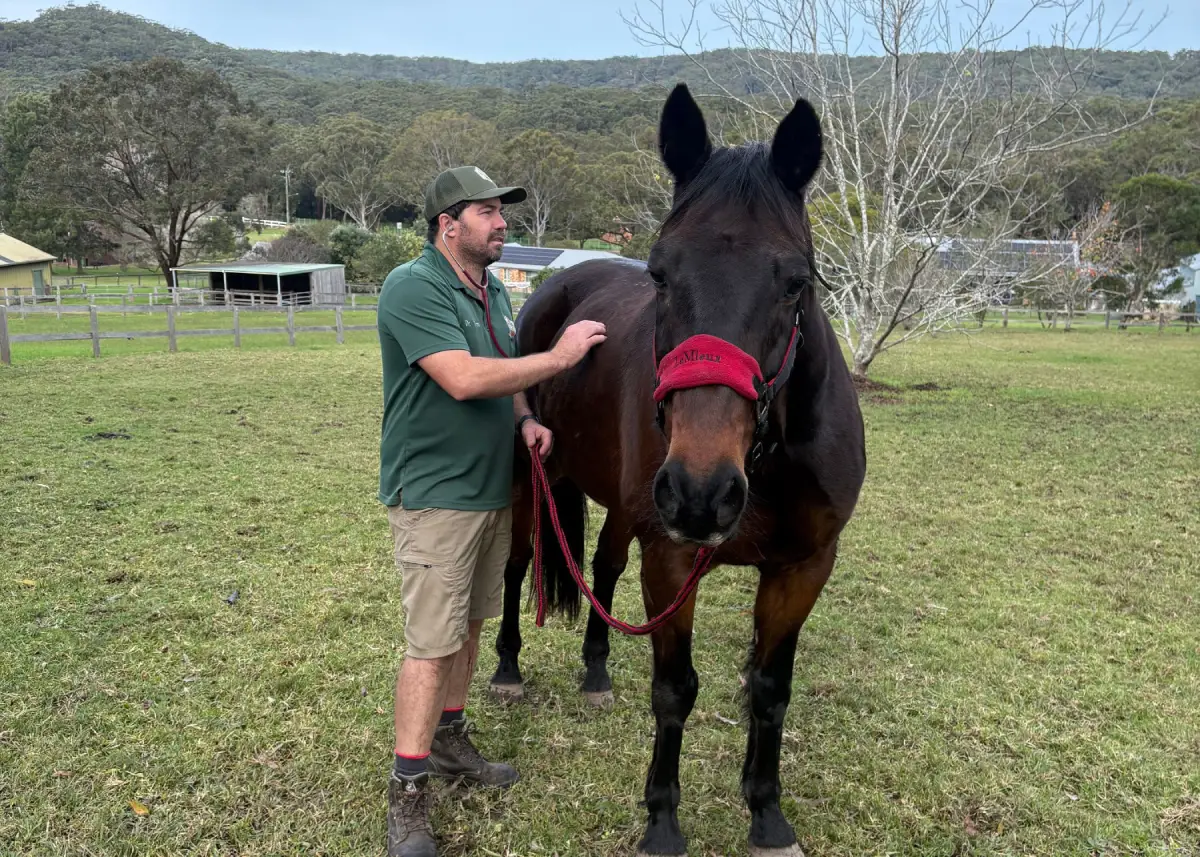
On arrival, the vet takes a history and then focuses on three things: heart rate, gut sounds, and, where it is safe and appropriate, a rectal examination. Together these guide whether the colic can be managed on the property or needs referral.
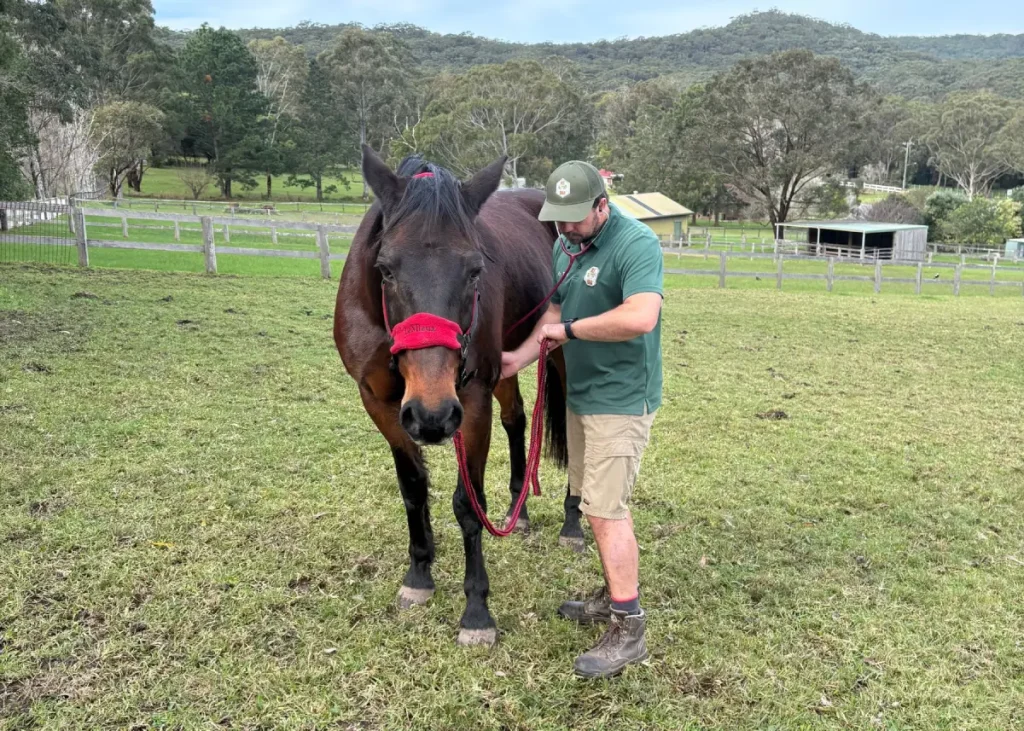
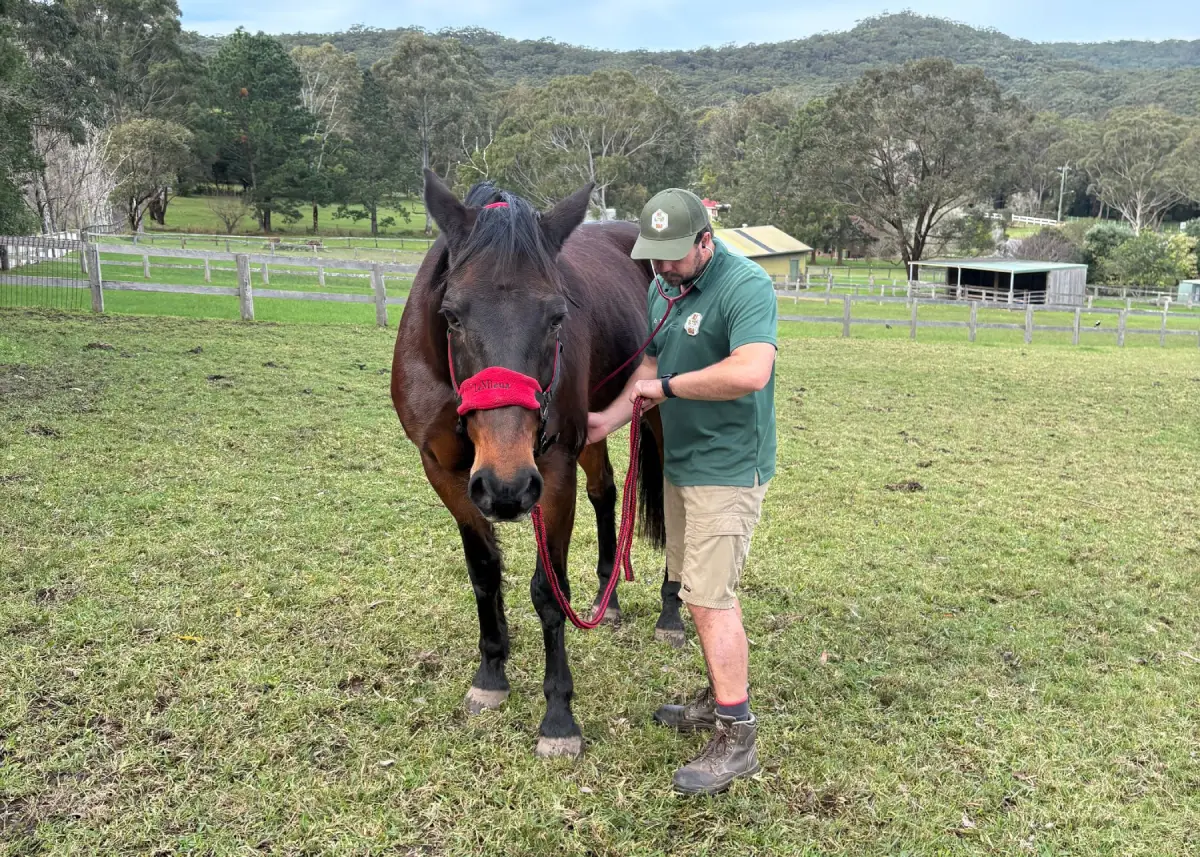
When Dr Tom arrives he starts with a full history: when it began, recent feed, droppings, water intake. Then he focuses on what matters most: “heart rate and gut sounds and rectal exam would probably be the three main things that I base my decision on.”
Heart rate is a key guide. A large field study of more than a thousand colic cases found vets rely most on cardiovascular signs and gut sounds when judging severity (primary evaluation of 1,016 horses with abdominal pain). A comfortable horse has a steady heart rate and audible gut sounds; a rising heart rate and a quiet, “turned off” gut are warning signs.
Where a horse is big enough, relaxed enough and it is safe, Dr Tom may perform a rectal examination “to see what’s potentially in the colon”, for example an impaction or sand, though not “if a horse is jumping and screaming.” These are practical field exams, not full internal assessments.
One point Dr Tom is keen for owners to grasp: serious colic doesn’t always look dramatic. “Some of them hold their signs well,” he says. The worst cases are not always the ones rolling “like they’re going to burst open”; some are “just standing there, just stretching out,” while the heart rate is over 100 and gut sounds have gone quiet. That is why a hands-on assessment matters, and why calling early is so valuable. The flip side is reassuring: most colics are mild, and caught early the majority can be treated on your property.
When Is Colic Surgical? Understanding Referral
A small number of colics, usually displacements, twists or obstructions, need surgery at a referral hospital. When that is the case, time is critical, and the sooner the horse is on the way, the better its chances.
Most colics are managed in the field, but some problems inside the abdomen, such as an entrapment, a twist or a significant impaction, cannot be fixed medically and need surgery at an equine referral hospital. The evidence is consistent that when surgery is required, early intervention improves survival and reduces complications (blood gas and acid-base indicators in equine colic).
Dr Tom explains why he urges owners to call early: “we call early in case it is a severe hospitalisation or surgical case. If some of these conditions in the abdomen are left too long, well, the prognosis is almost zero.” The sooner a surgical case reaches hospital, “the quicker you get that diagnosis, the better prognosis you have.”
If referral is needed, Dr Tom will say so clearly and can help coordinate getting your horse onto a float and on the road quickly. Surgical colic cases are referred to an equine hospital such as Newcastle Equine Centre or Agnes Banks Equine Clinic, and Dr Tom will direct you to the most appropriate one for your horse.
Preventing Colic on the Central Coast
Most colics are mild and diet-related, so the single biggest thing you can do to prevent colic is to keep your horse’s diet consistent and make any changes gradually.
Ask Dr Tom what owners could most easily change and the answer is diet. “Most of your colics are going to be mild and diet-related,” he says, often a change of feed or, on the Central Coast, “that fresh sugary summery grass.” Refining the diet and “learning more about horse nutrition would probably prevent a lot of horse colics.” A few habits help:
- Make feed changes slowly, over a week or more, never overnight.
- Watch the spring and summer flush. Rich, sugary new grass after Central Coast rain is a classic trigger, so limit grazing when pasture takes off.
- Keep fresh water available at all times (outside an active colic episode). Dehydration is a recognised risk factor, especially in the heat.
- Manage parasites sensibly. A heavy worm burden is a known cause of colic, so work with your vet on a strategic worming program (NSW DPI worm control in horses).
- Watch for sand. On sandy properties, horses can take in sand grazing bare pasture, so raise it with Dr Tom at your next visit.
- Keep horses moving. Regular turnout and exercise support healthy gut motility.
Frequently Asked Questions About Colic on the Central Coast
If your horse is showing any sign of colic, don’t wait to see if it passes. Call Vet on the Road now.
Vet on the Road is a locally-owned, mobile veterinary practice serving horse owners and properties across the Central Coast. Dr Tom Quilty brings more than a decade of mixed-practice experience to every visit, coming to your property so your horse can be assessed calmly at home, which is far less stressful for an animal already in pain. For colic and other equine emergencies, the sooner you call, the more we can do.
Phone or text: 0490 877 553
Hours: Monday–Friday, 8am–5pm
Service area: Central Coast NSW